
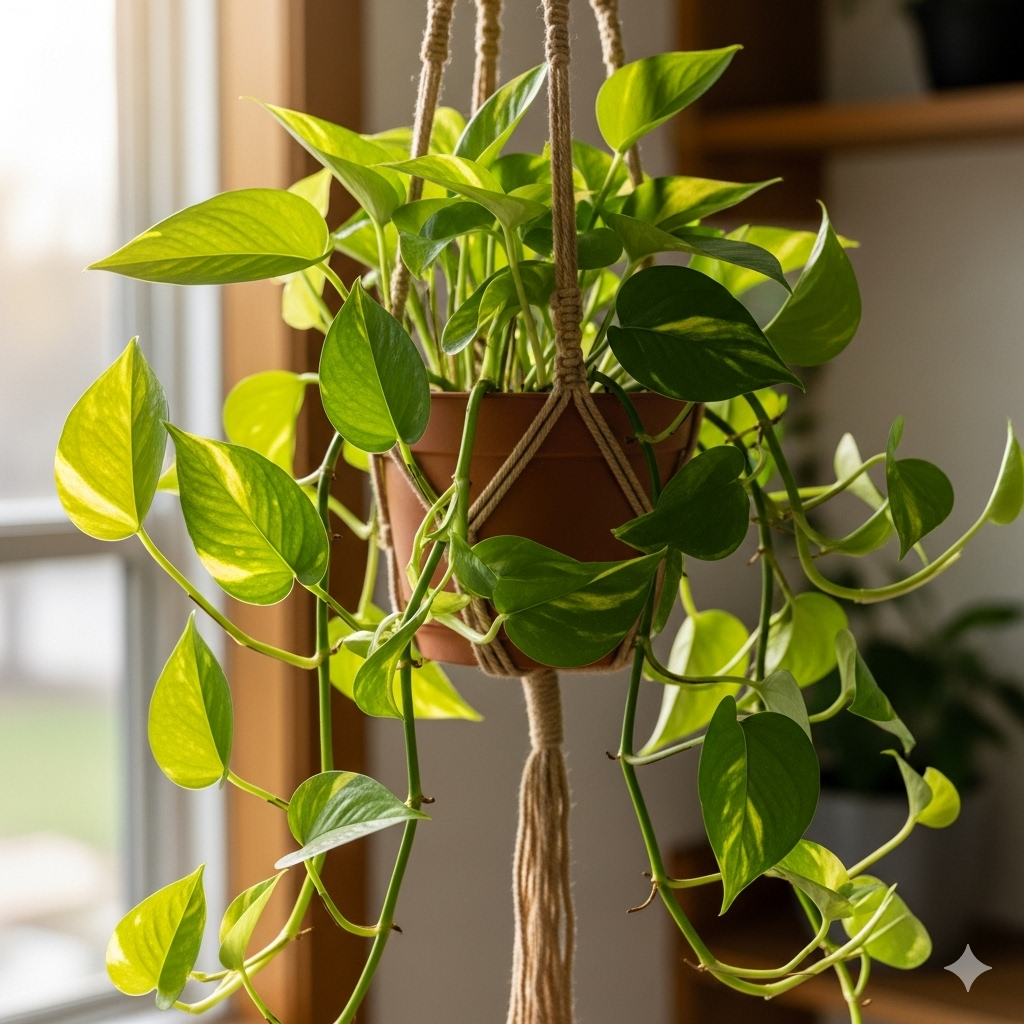
Pothos (Epipremnum aureum), also known as devil’s ivy, is one of the most beloved indoor plants thanks to its lush trailing vines, heart-shaped leaves, and ability to thrive with very little care. It is often the first choice for beginners because it tolerates conditions that many other houseplants struggle with, including low light. But one common question plant enthusiasts ask is whether pothos can actually grow without direct sunlight.
The simple answer is yes—pothos does not need direct sunlight to survive. In fact, too much direct sun can actually harm this plant. However, like all living plants, it does require some form of light to grow well. Understanding the lighting needs of pothos is the key to keeping it healthy and vibrant.
Why Pothos Doesn’t Need Direct Sunlight
In its natural environment, pothos grows beneath the canopy of tropical forests in Southeast Asia and the Pacific Islands. There, the plant receives filtered light that passes through taller trees and foliage. It rarely experiences harsh, direct rays of the sun. This natural adaptation explains why pothos does best in bright, indirect light rather than direct exposure.
Direct sunlight can scorch the leaves, leaving brown or faded patches. On the other hand, too little light can make the plant grow leggy, with smaller, paler leaves. The ideal balance lies in moderate, diffused brightness, similar to what it receives in its native habitat.
Growing Pothos in Low Light
One of the reasons pothos is so popular is its ability to adapt to low-light spaces. It can survive in darker corners of your home, offices with fluorescent lighting, or even bathrooms with minimal natural light. However, it’s important to note that while pothos can survive in low light, it will not thrive in the same way as it does in brighter conditions.
In dimly lit areas, you may notice slower growth and leaves that are less vibrant. Variegated pothos varieties, such as golden pothos or marble queen, may lose some of their striking patterns if they don’t get enough light, as the plant produces more green chlorophyll to absorb what little light is available.
The Best Lighting Conditions for Pothos
For optimal growth, pothos should be placed in a spot with bright, indirect light. A few feet away from a sunny east- or south-facing window is often ideal. If your window faces west, you may want to use a sheer curtain to soften the afternoon rays. North-facing windows can also work, though growth may be slower.
Unlike some plants, pothos adapts well to different rooms, making it versatile. It can hang from shelves, trail from hanging baskets, or climb on a support pole near a window. Just remember to avoid placing it in strong, direct sun for extended periods.
Signs of Too Much or Too Little Light
Your pothos will usually give you clear signals about whether it is happy with its light conditions. Here are some common signs to look for:
-
Too much light: Leaves develop dry brown edges, yellow patches, or scorched spots.
-
Too little light: Stretched-out vines, smaller leaves, loss of variegation, or very slow growth.
-
Ideal light: Steady growth with lush, vibrant leaves and strong trailing stems.
If you notice your pothos looking weak or pale, try moving it closer to a window or providing supplemental lighting.
Can Pothos Grow Under Artificial Light?
Yes, pothos adapts well to artificial lighting. This makes it an excellent choice for offices or windowless rooms. Fluorescent lights, commonly found in workplaces, provide enough brightness for pothos to maintain steady growth. Even better, full-spectrum LED grow lights can mimic natural sunlight and help your plant thrive indoors.
When using artificial light, position the plant about a foot or two from the source and keep the light on for at least 8–12 hours a day. This can make a big difference for pothos grown in very dark spaces.
Extra Tips for Healthy Growth
-
Rotate your plant: Turn the pot every couple of weeks so all sides receive equal light and prevent uneven growth.
-
Clean the leaves: Dust buildup reduces the plant’s ability to absorb light. Gently wipe the leaves with a damp cloth every month.
-
Match watering with light levels: Pothos in brighter light uses water faster, while those in shade need less frequent watering. Always let the soil dry out between waterings to avoid root rot.
-
Support climbing growth: Pothos naturally climbs in the wild. Giving it a moss pole or trellis near a light source encourages larger, healthier leaves.
Conclusion
Pothos can certainly grow without direct sunlight, and in fact, it prefers to avoid harsh rays. Its ability to adapt to different light levels makes it one of the most versatile and forgiving houseplants you can own. While it can survive in low light, it truly thrives in bright, indirect conditions or with the help of artificial lights. By understanding its lighting needs and making small adjustments, you can enjoy lush, trailing vines that bring life and greenery to any corner of your home.